Put the Phone Down, Babe: Let’s Talk About Phubbing
You’re sitting together on the couch. Maybe you’re mid-sentence, maybe just enjoying the quiet. You glance over… and there it is again. The glow of your partner’s screen lighting up their face as their thumb scrolls through yet another feed.
Sound familiar?
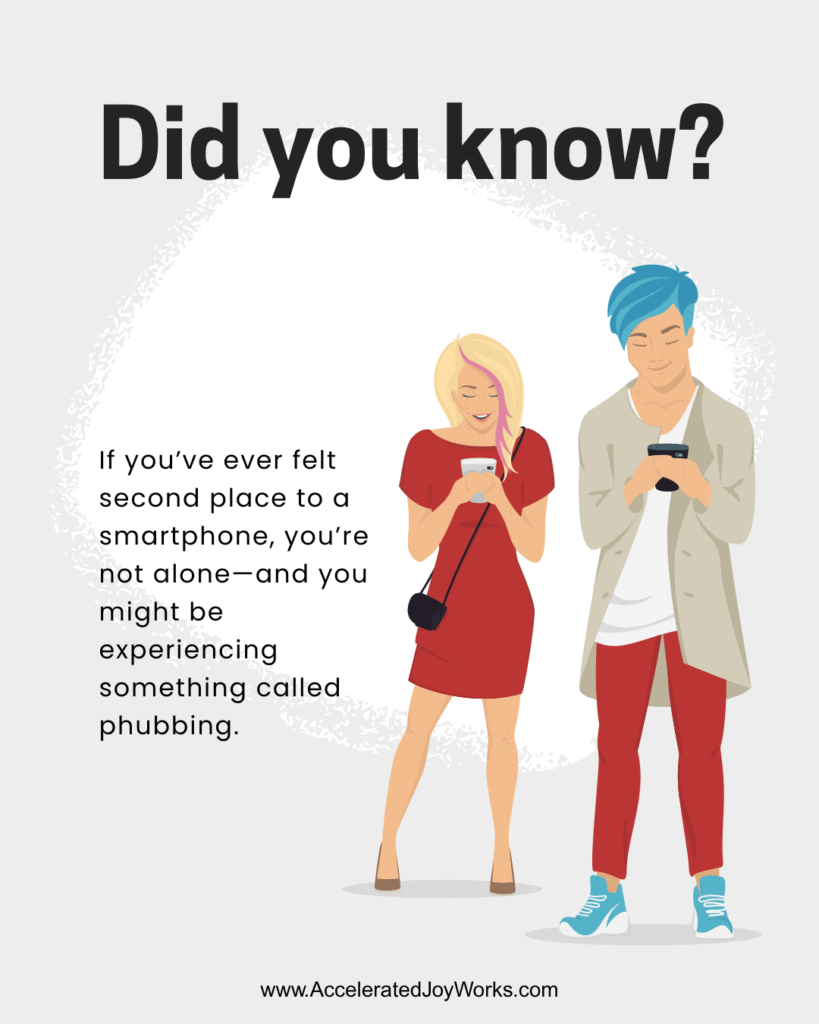
If you’ve ever felt second place to a smartphone, you’re not alone—and you might be experiencing something called phubbing.
💡 What Is Phubbing?
Phubbing—a mashup of phone and snubbing—happens when someone ignores their partner in favor of their phone. It might look like:
- Scrolling TikTok during a dinner date
- Checking messages while you’re sharing something meaningful
- Prioritizing social media likes over real-time eye contact
It might seem harmless at first (“I’m just checking one thing”), but studies show nearly half of romantic partners experience phubbing, and it’s taking a toll.
🚨 Why It Matters
Phubbing chips away at the foundation of emotional intimacy. Over time, it can:
- Lower relationship satisfaction
- Trigger feelings of resentment or rejection
- Signal to your partner: You’re not important right now
- Create an invisible wall of disconnect in otherwise close relationships
And the tricky part? Most people don’t even realize they’re doing it. That’s how addicted we are to our phones and screens!
👀 How to Recognize the Signs
Whether you’re the one doing the phubbing or the one on the receiving end, here are some telltale signs to look for:
- Conversations frequently get interrupted by phone use
- You feel less “seen” or less emotionally connected to your partner
- Quality time together feels more like background noise
- You’re hesitant to share because you’re not sure they’re fully present
📱 If your phone is within reach more than your partner feels your presence, that’s a red flag.
🗣️ How to Talk About It (Without Starting a Fight)
Phubbing isn’t usually intentional. It’s often a reflex, habit, or escape. So if you want to call it out, try to stay curious, not critical.
Here’s a soft-start script you can borrow:
“Hey, can I bring something up that’s been on my mind? I’ve noticed that when we’re together, your phone sometimes pulls your attention away. I miss feeling fully connected with you in those moments.”
Some helpful tips:
- Use I statements instead of you accusations
- Name the impact, not just the behavior (“I feel hurt when I’m talking and you look at your phone”)
- Invite collaboration: “Can we set some phone-free time just for us?”
💞 Rebuilding Intimacy After a “Phub”
Once you’ve talked about it, the goal isn’t perfection—it’s reconnection.
Try this:
- Set a tech boundary together. (Example: “Let’s make dinner and bedtime phone-free zones.”)
- Create intentional rituals of presence. (Tea before bed. Eye contact check-ins. Shared journaling.)
- Play the joy game. Trade phones for 15 minutes and each pick a song, a compliment, or a question that brings lightness.
And remember: joy doesn’t need bells, whistles, or Wi-Fi. It thrives in the small, intentional moments where you both feel seen and safe.
🌱 One Final Thought
At its core, phubbing is less about the phone—and more about what’s being avoided or missed. If either of you is reaching for distraction, it might be a gentle nudge to look deeper. What do you need more of? Presence? Validation? Playfulness?
You’re allowed to ask for more intimacy.
You’re allowed to say, “I want us to feel close again.”
✨ Want Help Navigating These Conversations?
This is exactly the kind of disconnection we untangle in sessions at Accelerated JoyWorks. If you’re ready to create deeper presence, clearer communication, and joy-centered relationships, I’m here to help.
👉 Book a complimentary consult or explore coaching options here.
Let’s go from ordinary to extraordinary—together.